15 Jul 2026
Payment Strategies and Gameplay Dynamics in Portable Casino Platforms
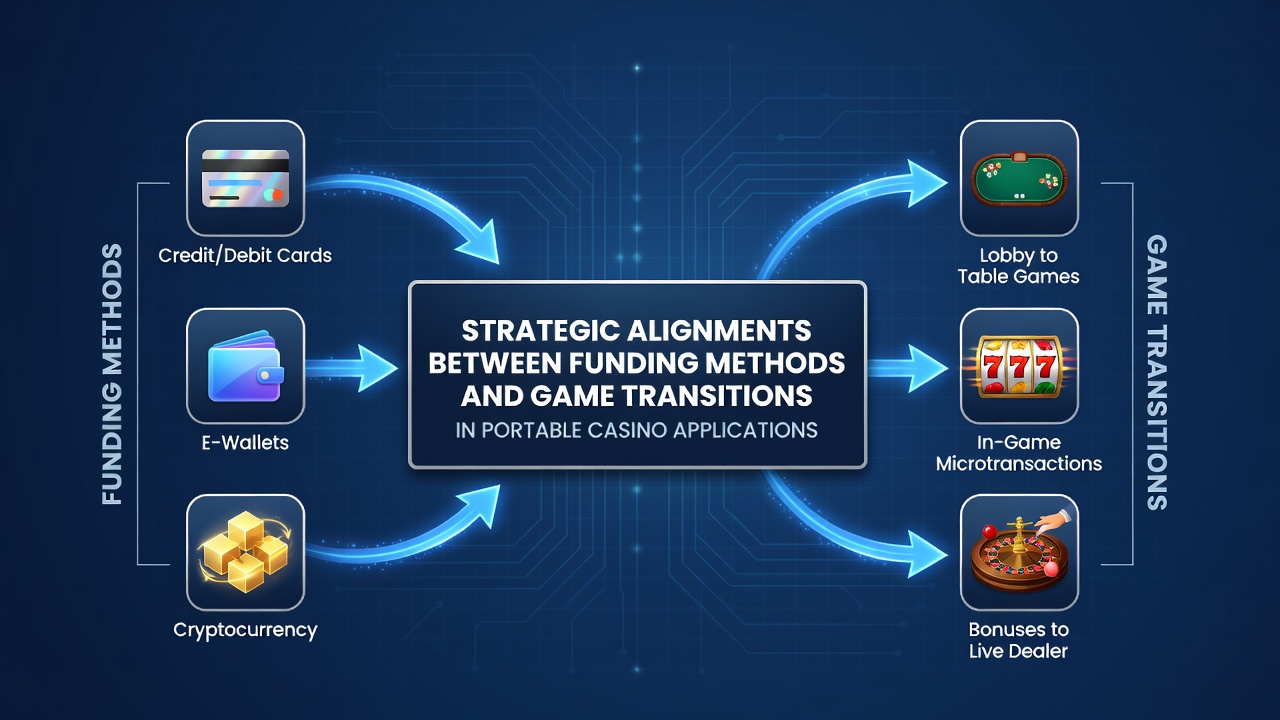
Portable casino applications have expanded their reach through integrated funding mechanisms that support rapid shifts between different game types. These alignments allow users to move from slot sessions to live dealer tables without interrupting account balances or bonus eligibility. Data from the Nevada Gaming Control Board shows mobile gaming revenue reached record levels during the first half of 2026, driven in part by smoother payment-to-game workflows.
Operators design funding methods to match the pace of game transitions. Instant deposit options such as digital wallets and prepaid cards reduce delays when players switch formats. Real-time balance updates ensure that funds from a completed slot round remain available for immediate use in roulette or blackjack environments. Research from the University of Nevada, Las Vegas indicates that platforms with unified payment ledgers experience higher session continuity rates compared to those relying on separate transaction queues.
Core Funding Methods in Mobile Environments
Digital wallets dominate portable casino funding because they connect directly to in-app balances. Users complete deposits in seconds, and the same interface handles withdrawals without requiring navigation to external banking portals. Prepaid vouchers and cryptocurrency transfers serve niche segments where privacy or regional restrictions limit traditional card use. Figures from the Canadian Gaming Association reveal that wallet-based transactions accounted for over 60 percent of mobile deposits in markets tracked through mid-2026.
Bonus structures often tie directly to these funding channels. Welcome offers activate upon first deposit confirmation, while reload promotions trigger automatically when players fund accounts mid-session. Loyalty programs track cumulative deposits across game types, awarding points that apply whether users remain in slots or move to live tables. Such alignments reduce friction during transitions because the same funding record feeds both promotional systems and gameplay credits.
Game Transitions and Their Technical Requirements
Portable applications rely on modular game engines that load new titles while preserving active session data. When a player exits a slot machine and enters a live roulette lobby, the software preserves wager history, balance figures, and active bonuses through shared backend APIs. This continuity depends on funding systems that update in milliseconds rather than batch processes. Studies published by the European Gaming and Betting Association highlight that platforms with sub-second ledger synchronization maintain higher retention during multi-game sessions.
Live dealer integration adds another layer of complexity. Video streams and betting interfaces must receive updated credit limits the moment a deposit clears. Operators achieve this through dedicated payment gateways that communicate directly with game servers. In July 2026 several major providers rolled out enhanced API layers that reduced transition latency by an average of 40 percent in tested markets, according to industry monitoring reports.
Strategic Alignments Observed in Practice
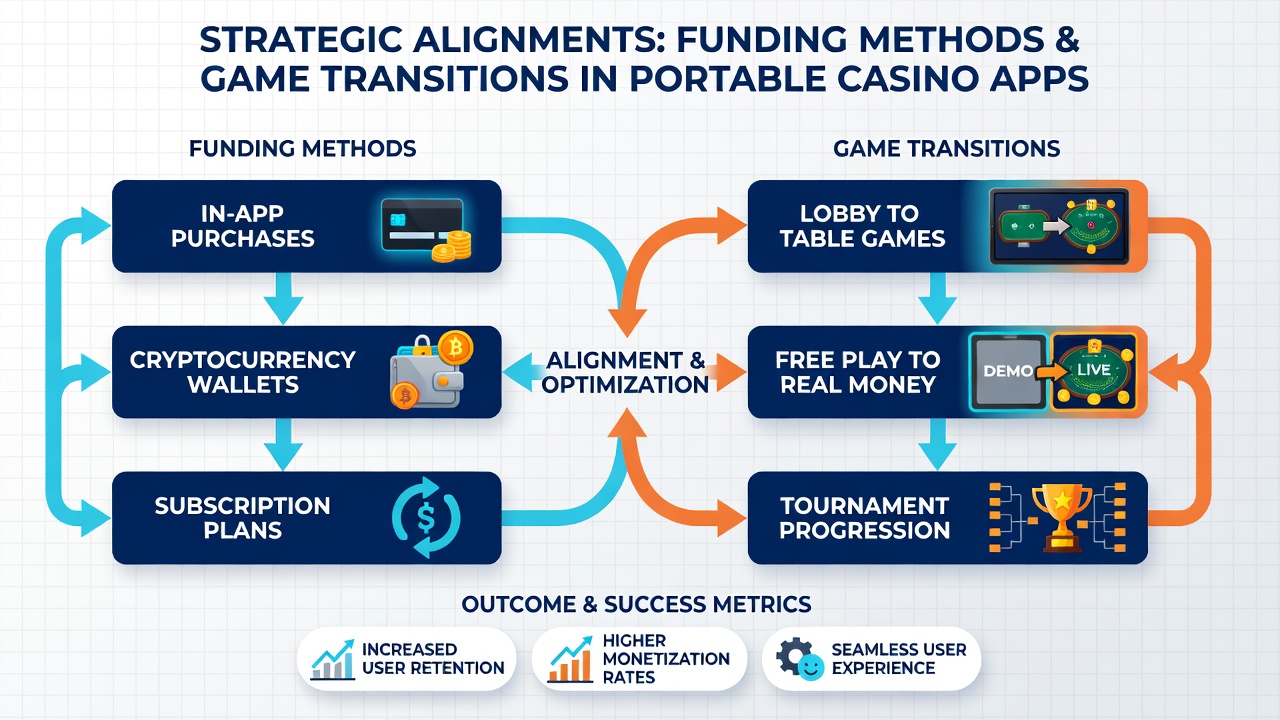
Successful operators align funding timing with expected player movement patterns. Data shows many users deposit before starting slots, then transition to table games after accumulating winnings. Systems that pre-authorize a portion of deposits for live play reduce approval steps during these shifts. One major European operator implemented a segmented wallet that reserves funds for different game categories, cutting transition interruptions by nearly half in internal testing.
Security protocols must scale with these alignments. Multi-factor authentication applied at deposit time carries forward to game access, preventing repeated verification prompts. Token-based session management ensures that once funding clears, subsequent game switches require no additional identity checks. Observers note that such measures support regulatory compliance across multiple jurisdictions without slowing user flow.
Regional Variations in Implementation
North American markets emphasize integration with state-regulated payment processors, while Asian operators often incorporate local e-wallet services popular with mobile users. Australian platforms have adopted real-time payment rails that align with national banking standards, allowing instant funding even during peak evening hours. These regional choices influence how smoothly players can move between game types because local infrastructure dictates transaction speed.
Academic reviews from the University of Sydney's gambling research unit found that platforms matching funding speed to local infrastructure reported fewer abandoned sessions during game transitions. The study tracked user behavior across three continents and linked payment-gateway performance directly to session length and game variety explored.
Conclusion
Alignments between funding methods and game transitions continue to shape portable casino application design. As transaction speeds improve and backend systems become more interconnected, operators gain new options for maintaining player engagement across diverse game libraries. Data collected through 2026 indicates that platforms investing in unified payment and game engines achieve measurable gains in session continuity and cross-format participation. These developments reflect ongoing technical coordination between financial infrastructure and interactive entertainment delivery.