19 Jul 2026
Tracing Incentive Pathways Linking No-Deposit Rewards to Portable Table Game Results

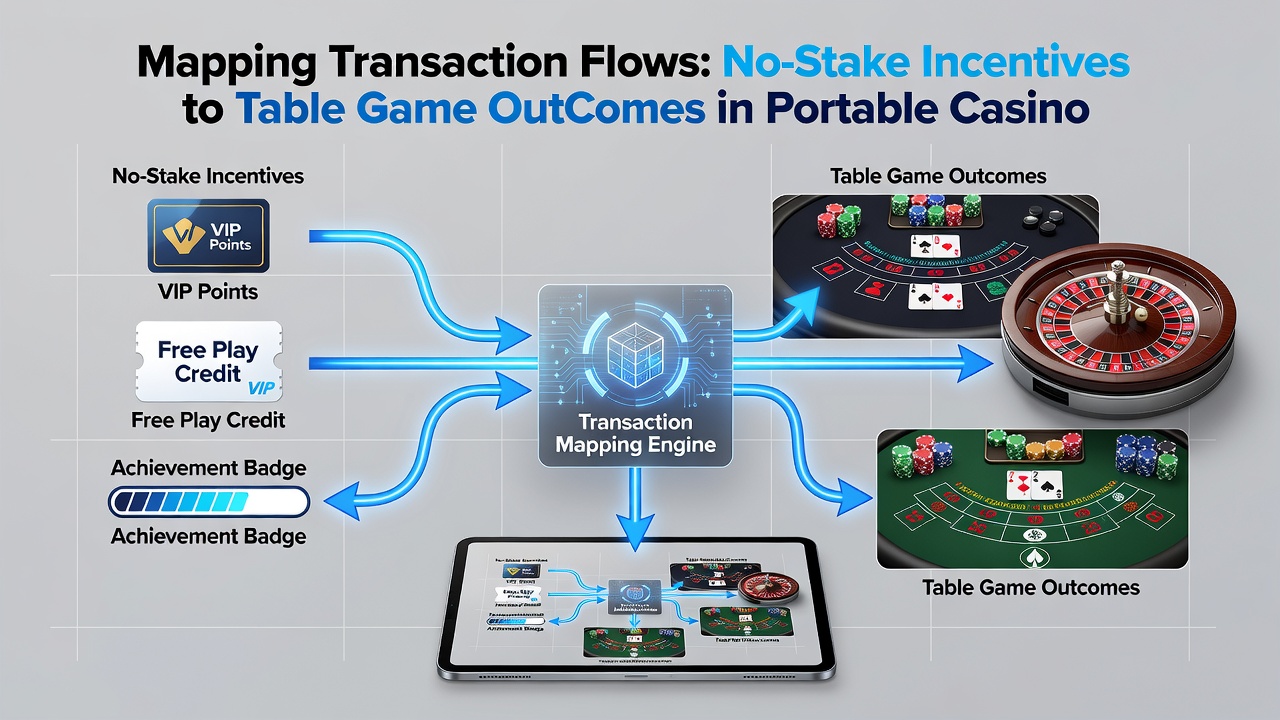
Transaction flows in portable casino environments create direct connections between no-stake incentives and table game results, and operators track these pathways through detailed mapping systems that record every bonus activation, wager placement, and payout event. These systems capture data from mobile devices where players access roulette, blackjack, and baccarat tables without depositing funds upfront, then follow how those incentives convert into game credits that influence win probabilities and final outcomes.
Core Components of No-Stake Incentive Structures
No-stake incentives operate as credit allocations that require no initial player deposit, yet they tie directly to wagering requirements that route funds through specific table game selections. Data from platform analytics shows these credits trigger immediate transaction logs that record entry into live dealer sessions or random number generator tables, and each subsequent bet draws from the incentive pool until conversion conditions complete. Researchers at institutions like the University of Nevada Reno have documented how these flows maintain separate ledgers that isolate incentive-derived balances from deposited funds, which prevents cross-contamination during outcome calculations.
Portable settings add layers of complexity because device location services and network handoffs generate additional metadata points that feed into the same transaction maps. Mobile applications log every session start and table switch, while backend processors align these events with incentive expiration timers and game result timestamps. This alignment allows operators to trace whether a no-stake credit produced a measurable shift in table game return-to-player percentages during a single play period.
Transaction Mapping Techniques in Mobile Environments
Mapping begins with incentive issuance events that create unique identifiers attached to player accounts, and these identifiers persist through every table game interaction until the reward converts to cashable winnings or expires. Systems employ graph-based models that connect incentive nodes to wager nodes and outcome nodes, revealing patterns such as repeated bets on even-money roulette positions or progressive side bets in blackjack. Industry reports from the European Gaming and Betting Association indicate that such graphs help identify when incentive balances disproportionately influence high-volatility table selections.
Real-time processing engines handle these maps by updating balances after each spin or hand, which creates sequential records that link initial credit grants to final session results. Portable device constraints require lightweight logging protocols that compress transaction data before transmission, yet the resulting datasets still retain full traceability from incentive origin to table outcome. Observers note that these protocols maintain accuracy even during network interruptions common in mobile play.
Outcome Correlations and Data Patterns
Analysis of mapped flows reveals correlations between no-stake incentive size and table game selection frequency, where larger credits correlate with increased participation in multi-hand blackjack formats. Figures released in July 2026 by regional gaming authorities in North America showed that portable sessions funded solely through incentives produced outcome distributions that aligned closely with standard table return rates once wagering thresholds cleared. These distributions emerged after processors filtered out early-session volatility caused by players testing unfamiliar mobile interfaces.
Transaction maps also track bonus conversion rates across different portable platforms, highlighting how operating system variations affect the speed at which incentive credits translate into realized table game results. Android and iOS environments generate distinct latency profiles that influence bet timing, and these profiles appear in the flow data as clustered outcome events around peak mobile usage hours. Researchers continue to examine whether these clusters produce statistically significant deviations from expected table game probabilities.
Regulatory Context and Platform Adaptations
Regulatory bodies outside the United Kingdom, including the Nevada Gaming Control Board, require operators to maintain auditable transaction maps that demonstrate incentive funds reach table games through documented pathways. Compliance documentation must show that no-stake rewards do not bypass standard outcome determination mechanisms, and portable implementations incorporate geofencing checks that log location data alongside each mapped transaction. These checks ensure that incentive flows remain consistent across jurisdictional boundaries.
Platform developers respond to these requirements by embedding mapping tools directly into game engines, which generate exportable reports that detail every incentive-to-outcome connection. Updates rolled out in mid-2026 added enhanced timestamp granularity that records millisecond-level events during live dealer interactions, improving the resolution of portable transaction graphs. Such enhancements support ongoing audits without disrupting player sessions.
Conclusion
Transaction flow mapping provides a structured method for connecting no-stake incentives to table game outcomes in portable casino settings, and the resulting datasets support both operational oversight and regulatory compliance. Continued refinement of these maps through platform updates and research input ensures that incentive pathways remain transparent across mobile environments. Data collection practices established through 2026 demonstrate sustained focus on traceability from initial credit allocation through final game resolution.